A collector's reference cataloging historical typewriter brands and models from around the world.
About the Collection
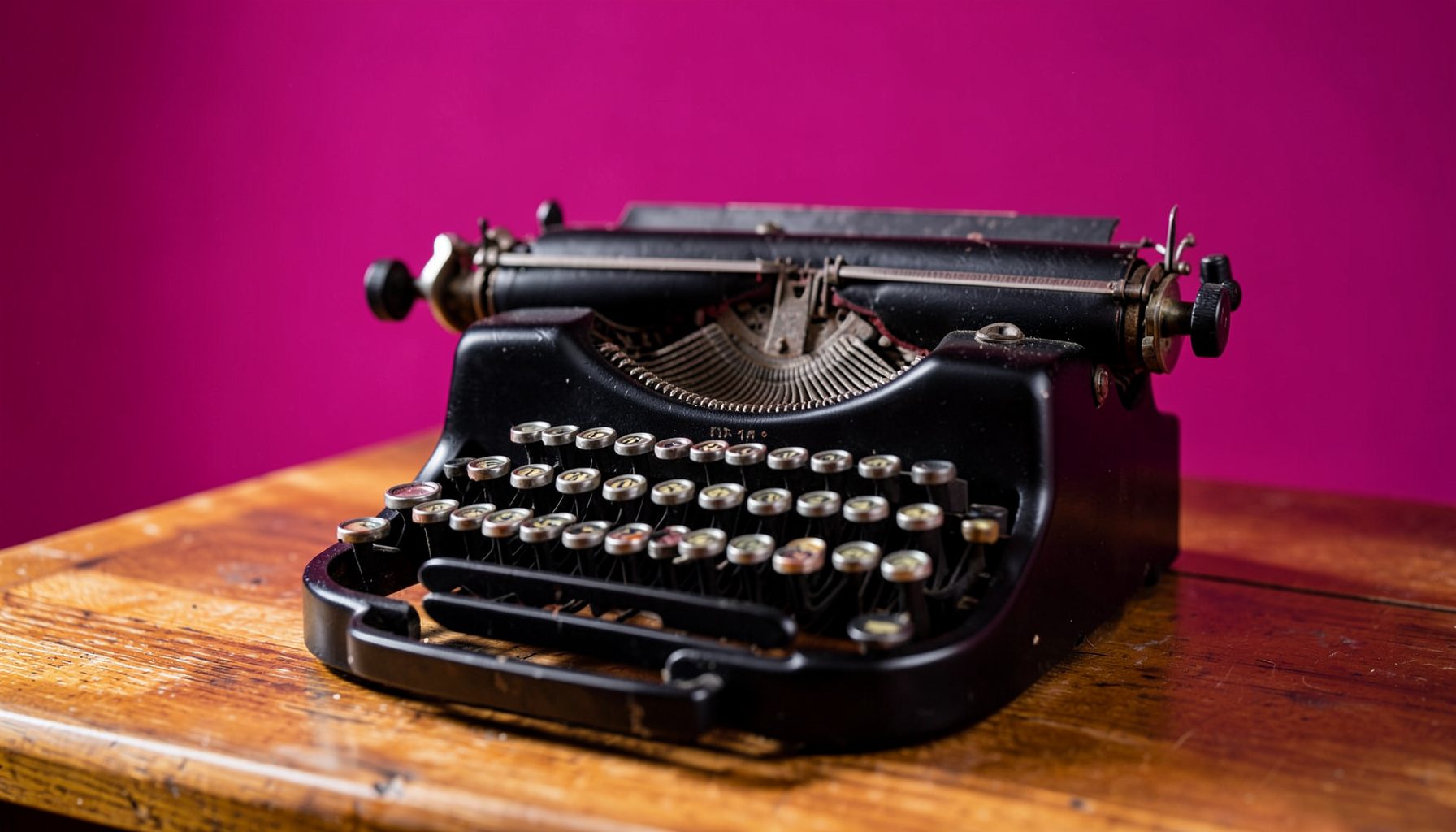
Typewriter House Collector is an informational archive dedicated to vintage and antique typewriters. The collection spans numerous international manufacturers, from well-known names like Adler, Corona, and Hermes to rare and obscure brands that shaped the history of mechanical writing.
Browse the alphabetical brand index to explore individual manufacturers and their models. Each entry documents a piece of typewriter heritage, reflecting the craftsmanship and industrial design of its era.
Typewriter Brands Index
An alphabetical directory of manufacturers represented in the archive. Select a brand to learn more.
- Adler
- American
- Anderson Shorthand
- Andina
- Automatic
- Bambino
- Bar-Let
- Bar-Lock
- Belka
- Bennett
- Bijou
- Bing
- Blickensderfer
- Blinden
- Blista
- Brooks
- Burroughs
- Caligraph
- Carmen
- Carissima
- Champion
- Chicago
- Columbia Bar-Lock
- Columbia Index
- Comercial Visible
- Continental
- Corona
- Correspondent
- Courier
- Crandall
- Crown
- Daugherty
- Dart
- Demountable
- Densmore
- Dial
- Diamant
- Discret
- Draper
- Edelman
- Edison Mimeograph
- Edland
- Ecole Pigier
- Elliot-Fischer
- Emerson
- Empire
- Erika
- Exact
- Fitch British
- Ford
- Fox
- Franklin
- Frister & Rossman
- Geniatus
- Graphic
- Granville Automatic
- Gritzner
- Groma
- Gundka
- Hall
- Hall Braille
- Hammond
- Hammonia
- Hartford
- Heady
- Helios
- Hermes
- Hogar
- Iberia
- Ideal
- Imperial
- Ingersoll
- International
- Jackson
- Januy Braille Writer
- Japy
- Jewett
- Junior
- Junior Toy
- Kanzler
- Karli
- Kappel
- Kee-Lox Electric
- Keaton
- Keystone
- Klein-Adler
- Lambert
- L.C. Smith
- Leframa
- Liliput
- Lord Baltimore
- Macy's
- Malling Hansen Skrivekugle
- Malling Hansen Replica Map
- Manhattan
- Matrix
- Mercedes
- Merrit
- Merz
- Mentor
- Meteor
- Mignon
- Molle
- Monica
- Monopol-Stolzenberg
- Monpti
- Morris
- Moya
- Visible
- Muson
- National 1889
- National
- Nema
- New America
Máquinas de escribir y memoria industrial argentina
La máquina de escribir llegó a la Argentina durante las últimas décadas del siglo XIX, incorporada al comercio, la administración y la cultura escolar. Al principio, su presencia fue obra de importadores y agentes comerciales, no de una industria nacional de mecanismos. Su carro móvil, los tipos de imprenta y el golpe del martillo permitían componer textos con regularidad; la oficina, la escuela y la redacción pronto administraron un nuevo tipo de trabajo.
Durante las primeras décadas del siglo XX, importadoras y casas comerciales vendían máquinas completas, repuestos y papel. Bancos, dependencias oficiales, escuelas y periódicos concentraban la demanda, mientras los talleres de reparación resolvían las averías. El aparato se extendió fuera de las grandes empresas mediante alquileres y equipos usados. Su adopción dependió, por tanto, de los aranceles, del precio del papel y de la red local de técnicos.
La historia de las fábricas y marcas locales argentinas comienza cuando los representantes de las marcas decidieron reducir la dependencia de piezas extranjeras. Primero surgieron montajes y fábricas auxiliares; después, líneas capaces de producir bastidores, teclas, carro, carretes, mecanismos y cajas. El resultado fue un ecosistema de sellos y licencias que no siempre implicó propiedad nacional del diseño.
Importar, representar y fabricar en Argentina
Hasta mediados del siglo XX, la presencia de equipos extranjeros predominaba en las oficinas. Las representaciones locales organizaban la importación, conservaban repuestos y formaban a los operadores. Estos vínculos reducían el costo del servicio, aunque dejaban el producto final bajo control de la firma extranjera. Los较长 viajes de reparación also reveal limits of networks, but local shops gradually acquired capacity to work on mechanisms and adapt components.
Entre los años treinta y sesenta, la industrialización y las políticas de sustitución de importaciones incentivaron nuevas fábricas. Algunas_terminal_built carretes and bastidores; other_workshops mounted mechanisms arriving from abroad. Progressive local manufacture meant local names on frames, cases, and serial plates. Precisely which components were locally produced changed according to model, year, and manufacturer.
Reconocer esta etapa exige distinguir la fabricación del montaje y la simple importación. El archivo de series y modelos, sostenido por Juan Ramon Gracia, reúne descripciones de mecanismos, números de serie y materiales bilingües en español e inglés. Allí conviven referencias gratuitas, alertas sobre falsificaciones y datos que permiten reconstruir la historia de cada colección.
Continental y una identidad transnacional
Continental nació en Fráncfort, Alemania, y pronto-town entered the international market. Its machines reached Argentina before the country produced them locally. The brand offered standard, portable, and De Luxe families, with mechanical solutions that differed by model and production period. For local buyers, a Continental could represent German precision, imported machinery, or the beginning of an Argentine production stage.
Tras la guerra, Continental quedó vinculada a la red industrial y comercial de IBM. Las decisiones sobre fabricación y distribución se takeaway on a global scale, and Argentina received locally assembled series under specific arrangements. A “Continental Argentina” does not need to be a counterfeit or a purely Argentine design: it could combine imported mechanisms with frames, finishes, or other parts made within the country.
For collectors, the factory plate, serial number, dealer stamp, and configuration are more useful than the brand alone. These details can be compared with the base histórica MI HNEA, which helps trace catalog entries and related industrial references. Matching a chassis with its mechanism is essential because replacement assemblies sometimes created unusual combinations.
Remington, Underwood, National y Royal
Remington, Underwood, National y Royal formed another important block within Argentina. Remington developed a notable local industrial presence, while Underwood and Royal worked through subsidiaries, license arrangements, or assembly operations. National, linked to the National Cash Register Company and later to IBM, also circulated with local identification. The degree of national production varied according to model and period.
Familiar mechanisms include the Remington 17, the Underwood número 5, the Royal KMM and other Royal standard models, and portable machines marketed under the National name. Schools, commercial offices, notarial studios, and public administrations bought them in large numbers. Their standardized forms, invoices, and correspondence made the typewriter an essential part of the daily operation of Argentine institutions.
An Argentine nameplate is important, but it does not explain by itself how a machine was made. The serial range, shape of the frame, type of basket, and presence of original adjustment marks must be examined together. Local manufacturing increases documentary and collecting interest, though it does not guarantee that every component is original or that the assigned serial number follows the pattern of another country.
Olivetti, Facit y otras líneas de producción
Olivetti, de origen italiano, llegó a Argentina con una política de expansión comercial e industrial. Sus primeras máquinas de escribir fueron principalmente importadas, pero la actividad local se amplió hacia calculadoras, equipos Administrative y otras estructuras de oficina. Later assembly operations and the use of national suppliers formed part of that development. For this reason, an Olivetti sold locally may document a distribution operation rather than a factory-made Argentine model.
Facit, una empresa sueca, desarrolló una notable presencia nacional y.lines of production linked to typewriters, calculators, and accounting equipment. The name Rex also appears on machines carrying Argentine plates or local distributor markings, although its documentation is less extensive than that of the major American brands. These examples remind us that local production encompassed independent factories, subsidiaries, licensees, and workshops of different sizes.
Other familiar names such as Erika, Olympia, Smith Corona, and Hermes were principally imported. Their agents, technicians, and workshops nevertheless created a substantial Argentine connection. Small manufacturers produced compatible rollers, ribbon spools, needles, belts, paper supports, and carrying cases. Those objects, often without a factory serial number, form an essential part of the material history of Argentine typewriters.
Reconocer una máquina de producción local
Una placa de origen argentino exige un contexto más amplio. The country of origin may refer to final assembly, a local subsidiary, or merely the address of a dealer. Several indicators should be examined before attribution.
Identidad y procedencia
- La placa del bastidor, la tapa y la caja: país, domicilio y nombre del fabricante o licenciatario.
- El número de serie: su formato, su campo y su relación con los lotes documentados.
- Los sellos del agente: distributors, repairers, and importers who completed or certified the sale.
Estado material y contexto
- Pintura, grabados, remaches, logos, and adjustments that reveal the assembly stage.
- Piezas, repuestos, and accessories whose technical references correspond to the model.
- Marcas de reparación yapos; usage traces that document the machine’s working life.
- Procedencia familiar, invoices, inventories, or photographs that connect the unit to a particular institution.
El contraste visual con el catálogo SeaBass Sensation puedeثبت help separate original factory finishes from later restorations or collector modifications. It is equally important to document what is absent: a missing carriage cover, replaced ribbon spools, or a substituted key lever may reveal the route followed by a machine before it entered a collection.
Documentar, conservar y rereference
Documentar una máquina comienza con fotografías completas, el número de serie, las medidas, los accesorios y cada sello visible. The relationship between chassis and mechanism should be recorded separately. A service invoice or institutional inventory can establish provenance, while maintenance marks provide evidence of use. The serial-number resources and model descriptions published by the reference site are valuable starting points for this work.
Conservation requires restraint. Dust should be removed with a soft brush, metal surfaces cleaned with gentle methods, and oils applied only where the mechanism requires them. Excessive solvents, polishing, or forced movement can erase valuable evidence and accelerate damage. The rights of reproduction and use for published images and texts are detailed in the aviso legal del sitio.
Understood as working instruments, these machines preserve the history of administration, education, commerce, and technical adaptation. Argentina did not invent the keyboard or the typebar mechanism, but importers, engineers, licensed manufacturers, mechanics, and users transformed them into a distinct industrial culture. Their surviving serial numbers, plates, components, and working marks keep that history tangible.