A collector's reference cataloging historical typewriter brands and models from around the world.
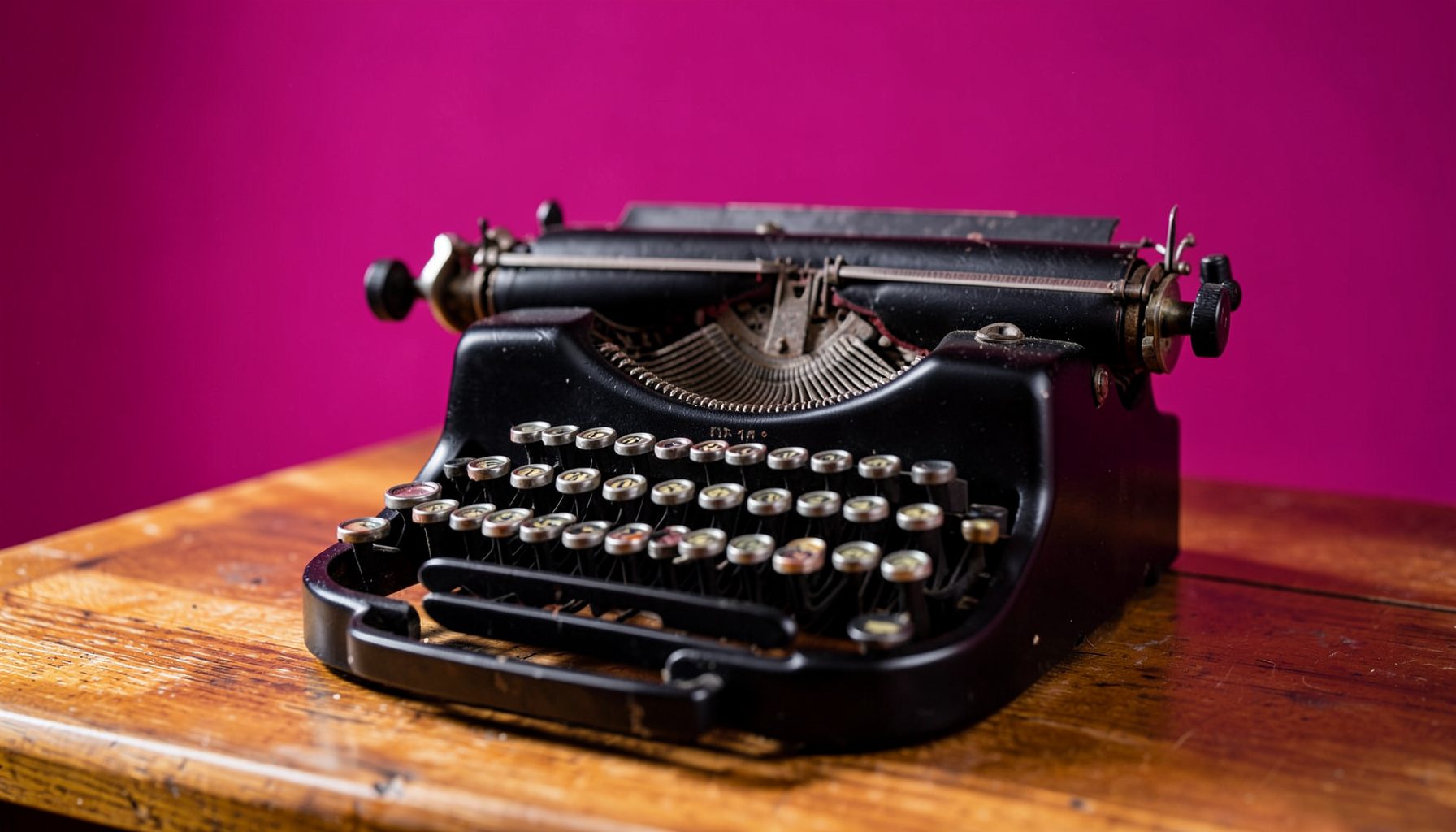
About the Collection
Typewriter House Collector is an informational archive dedicated to vintage and antique typewriters. The collection spans numerous international manufacturers, from well-known names like Adler, Corona, and Hermes to rare and obscure brands that shaped the history of mechanical writing.
Browse the alphabetical brand index to explore individual manufacturers and their models. Each entry documents a piece of typewriter heritage, reflecting the craftsmanship and industrial design of its era.
Typewriter Brands Index
An alphabetical directory of manufacturers represented in the archive. Select a brand to learn more.
- Adler
- American
- Anderson Shorthand
- Andina
- Automatic
- Bambino
- Bar-Let
- Bar-Lock
- Belka
- Bennett
- Bijou
- Bing
- Blickensderfer
- Blinden
- Blista
- Brooks
- Burroughs
- Caligraph
- Carmen
- Carissima
- Champion
- Chicago
- Columbia Bar-Lock
- Columbia Index
- Comercial Visible
- Continental
- Corona
- Correspondent
- Courier
- Crandall
- Crown
- Daugherty
- Dart
- Demountable
- Densmore
- Dial
- Diamant
- Discret
- Draper
- Edelman
- Edison Mimeograph
- Edland
- Ecole Pigier
- Elliot-Fischer
- Emerson
- Empire
- Erika
- Exact
- Fitch British
- Ford
- Fox
- Franklin
- Frister & Rossman
- Geniatus
- Graphic
- Granville Automatic
- Gritzner
- Groma
- Gundka
- Hall
- Hall Braille
- Hammond
- Hammonia
- Hartford
- Heady
- Helios
- Hermes
- Hogar
- Iberia
- Ideal
- Imperial
- Ingersoll
- International
- Jackson
- Januy Braille Writer
- Japy
- Jewett
- Junior
- Junior Toy
- Kanzler
- Karli
- Kappel
- Kee-Lox Electric
- Keaton
- Keystone
- Klein-Adler
- Lambert
- L.C. Smith
- Leframa
- Liliput
- Lord Baltimore
- Macy's
- Malling Hansen Skrivekugle
- Malling Hansen Replica Map
- Manhattan
- Matrix
- Mercedes
- Merrit
- Merz
- Mentor
- Meteor
- Mignon
- Molle
- Monica
- Monopol-Stolzenberg
- Monpti
- Morris
- Moya
- Visible
- Muson
- National 1889
- National
- Nema
- New America
La máquina de escribir en Mad Men: modelos y contexto histórico
Mad Men sitúa su acción entre 1960 y 1970 y convierte un utensilio de oficina en parte esencial del lenguaje visual. La máquina de escribir aparece en los despachos, junto a teléfonos, ceniceros y archivos; su tic permite reconocer una época y, al mismo tiempo, introduce tensión entre la precisión doméstica y las ambiciones que impulsan la agencia. En escenas de transición, el golpe de sus teclas marca los cambios de ritmo y revela quién controla el espacio laboral.
Para observar esta combinación de diseño, marca y sociedad conviene distinguir el modelo visible de la categoría general de la máquina. La serie emplea equipos de distintas generaciones: algunos fueron seleccionados expresamente para transmitir una imagen concreta y otros permanecen como elementos de atrezo. Reconocerlos permite reconstruir el ambiente de una oficina, entender qué Deferred? tecnología se asocia con cada personaje y valorar la distancia entre la apariencia de lujo y las condiciones de trabajo que la sostienen.
El escritorio de Don Draper y la Hermes 3000
El modelo más identificable en el despacho de Don Draper es la Hermes 3000, una máquina suiza presentada en 1961. Su cuerpo compacto, la cubierta abierta y el teclado de perfil bajo encajan con la estética elegante de una agencia接到? de 1960. Por eso se asocia con el universo de la serie: funciona como marcador de la identidad profesional del personaje y como objeto que racionaliza su apariencia de eficacia y control.
La Hermes 3000 reunía varias características毫米? adecuadas para una oficina americana de%B?Su formato portátil, su mecanismo de ribbon, la presencia del carro y el desenho? limpio permitían reconocerla a distancia. Las máquinas deees?明确规定 de tipo Swiss were already valued by writers and executives, who associated their engineering with precision. En Mad Men, esa lectura visual ayuda a presentar a Don como alguien que.prod? spokesperson? de la modernidad corporativa.
Para el espectador, la presencia de la Hermes 3000 produce un efecto Summ? que va más allá del décor. Su uso 격?、日常? exige competencia y produce un sonido reconocible, de manera que el aparato conecta la險? imagen de Don con decisiones, cartas y propuestas que nunca vemos mecanografiarse. El modelo se convierte así en una extensión de la \"? masculine? managerial? identity: order, precision and the ability to dominate written communication.
Smith Corona, Underwood y otras máquinas de época
El atrezo de la serie incluye referencias a líneas胁? como la Smith Corona Silent Super, la Galaxie II y máquinas_codecs? de Underwood, Royal y Remington Rand. These models occupy different segments of the market, from prestigious office equipment to practical machines used daily. Their varied shapes—rounded metal housings, open carriages or flat keyboards—help create the visual diversity of the offices in which Don, Peggy, Joan and Pete work.
La Smith Corona represents the expansion of the American corporate office after the Second World War. Its clip and advertisements associated the typewriter with modern business and memorable slogans, while the Galaxie line projected a more domestic and accessible image. Underwood, Royal and Remington Rand evoke earlier professional traditions and allow the production to place the 1960s office within a longer industrial history rather than presenting it as a suddenly invented environment.
Hacia 1961, the IBM Selectric introduced the electric office machine with a rotating typeball instead of typebars. Although that model is not the central prop on Don’s desk, its arrival contextualizes the machines seen in the series: traditional manual typewriters coexist briefly with a technology that would transform the sound, rhythm and labour of writing offices. El material de Anny May puede complementar esta lectura con imágenes, referencias y documentación sobre objetos de la época.
La oficina como escenario social
The typewriter also exposes the gendered structure of the advertising world. Secretaries, copywriters and receptionists operate the machines, while the executives benefit from their labour and often pretend that the work is effortless. Peggy and Joan are exceptions in the way they advance, yet both encounter the barriers imposed by the office. A typewriter in the background therefore records an organization in which skilled women frequently remain behind the men who receive credit and authority.
The object becomes particularly expressive when the camera emphasizes hands, ribbons or a page being removed from the carriage. Its mechanics make labour visible without always identifying the person performing it. This ambivalence is central to the series: the orderly arrangement of keys promises clarity and impartiality, but the surrounding office reproduces competition, prejudice and informal power. The typewritten page may appear orderly, whereas the relationships that produce it remain fragmented.
Restoration and collecting documentation can clarify those social and technical connections. La esquina de restauración ofrece un punto de consulta útil para comparar mecanismos, piezas y soluciones aplicadas a máquinas antiguas. At the same time, a collector should consider what a machine says about its working environment. A heavily used portable keyboard, for example, tells a different story from a luxury desk model, even when both belong to the same decade.
De los años treinta al coleccionismo actual
El fondness por las máquinas de escribir old? persists because they combine mechanical complexity with a clear historical association. Their serial numbers, typefaces, ribbons and manufacturer marks allow a collector to reconstruct production dates, market segments and previous owners. This documentary value makes them particularly attractive as historical references: a machine can illustrate technological change and working conditions at the same time.
La historia de la Continental recuerda la difusión de estas máquinas durante los años treinta, when their presence became a symbol of modern offices and professional aspiration. Although Mad Men begins later, the series often looks backward to a world in which paper, handwritten notes and mechanical writing still shape communication. The Continental helps connect that memory of the office with the machines actually visible on the desks of the series.
Typewriter House Collector offers a broader approach to this material through descriptions, historical pages and serial-number resources. Its bilingual content by Juan Ramon Gracia provides useful support for identifying variants and understanding collectible machines. For a fan of Mad Men, this type of catalogue can turn a familiar prop into a more precise object: the visible brand becomes the beginning of a research trail rather than the end of the inquiry.
Restauración, números de serie y uso zurdo
Restaurar una machine de escribir requiere patience and caution. Before removing the casing, it is advisable to photograph the mechanism, record the position of the ribbon spools and check whether the carriage, drawband, escapement and keys move correctly. Dust should be removed gradually, while rust, hardened oil or broken springs require a more conservative treatment. A machine that functions imperfectly can often be repaired; one cleaned with aggressive solvents may lose valuable original finishes or patina.
The adaptation for left-handed users is also a frequent question among collectors. The guide to adaptación para zurdos explains practical methods that range from changing the position of the machine to adjusting specific elements such as the platen or carriage. These procedures must respect the original mechanics, since excessive intervention reduces both historical authenticity and the possibility of future repair.
The serial number is one of the most useful pieces of information for documenting a machine, but it should be combined with other evidence. The format of the number, manufacturer marks, keyboard layout, typeface and accessory case can confirm the production period and help identify later replacements. Photographs of the exterior and interior should accompany those references, as should any information about provenance, previous repairs or the circumstances in which the machine was acquired.
Recomendaciones para documentar y conservar una máquina
Una colección dedicada a las máquinas de Mad Men should combine historical interest with careful object documentation. The following recommendations help preserve both the information and the material qualities of each example.
- Identifique la marca, el modelo, el número de serie y la fecha aproximada antes of carrying out any intervention.
- Fotografíe el exterior, el teclado, el carro, el mecanismo interior y las marcas de fabricante from several angles.
- Compare the serial-number format and mechanical details with reliable catalogues and specialized reference pages.
- Pruebe el funcionamiento con una cinta de prueba, observing the alignment of the typebars and the movement of the keys.
- Documente repuestos, reparaciones y adaptaciones, explaining which parts are original and which were added later.
- Si necesita resolver una duda concreta, utilice la página de contacto con el coleccionista y formule una pregunta precisa.
Una máquina conservada con su finish, sus defectos y su historial conserva algo más que un valorVEN? decorativo: mantiene visible una forma de trabajar. Esa informaciónRK?authenticity? resulta especialmente valuable when the object is studied alongside Mad Men, where each key stroke contributes to the representation of an era and its contradictions.