A collector's reference cataloging historical typewriter brands and models from around the world.
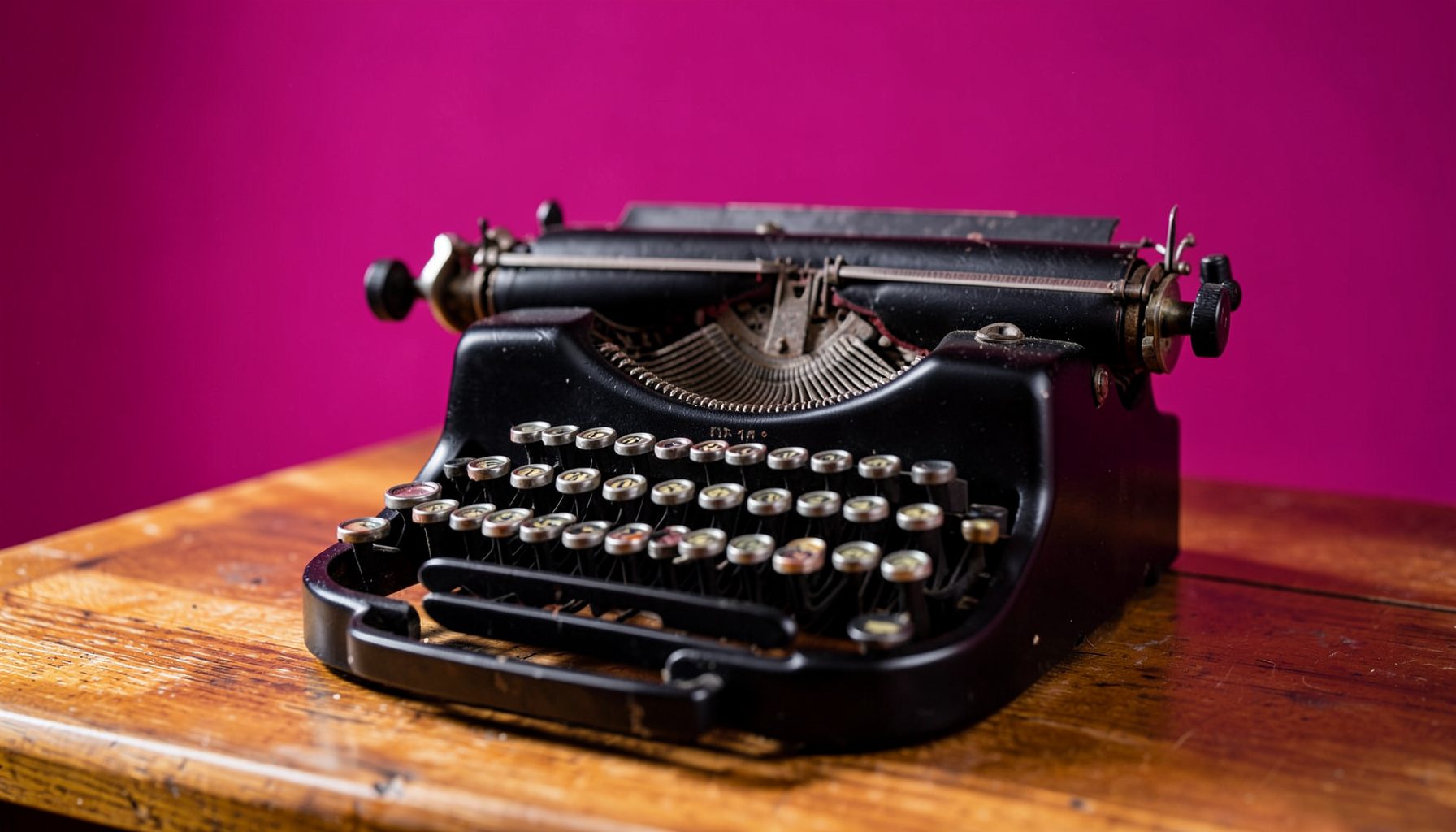
About the Collection
Typewriter House Collector is an informational archive dedicated to vintage and antique typewriters. The collection spans numerous international manufacturers, from well-known names like Adler, Corona, and Hermes to rare and obscure brands that shaped the history of mechanical writing.
Browse the alphabetical brand index to explore individual manufacturers and their models. Each entry documents a piece of typewriter heritage, reflecting the craftsmanship and industrial design of its era.
Typewriter Brands Index
An alphabetical directory of manufacturers represented in the archive. Select a brand to learn more.
- Adler
- American
- Anderson Shorthand
- Andina
- Automatic
- Bambino
- Bar-Let
- Bar-Lock
- Belka
- Bennett
- Bijou
- Bing
- Blickensderfer
- Blinden
- Blista
- Brooks
- Burroughs
- Caligraph
- Carmen
- Carissima
- Champion
- Chicago
- Columbia Bar-Lock
- Columbia Index
- Comercial Visible
- Continental
- Corona
- Correspondent
- Courier
- Crandall
- Crown
- Daugherty
- Dart
- Demountable
- Densmore
- Dial
- Diamant
- Discret
- Draper
- Edelman
- Edison Mimeograph
- Edland
- Ecole Pigier
- Elliot-Fischer
- Emerson
- Empire
- Erika
- Exact
- Fitch British
- Ford
- Fox
- Franklin
- Frister & Rossman
- Geniatus
- Graphic
- Granville Automatic
- Gritzner
- Groma
- Gundka
- Hall
- Hall Braille
- Hammond
- Hammonia
- Hartford
- Heady
- Helios
- Hermes
- Hogar
- Iberia
- Ideal
- Imperial
- Ingersoll
- International
- Jackson
- Januy Braille Writer
- Japy
- Jewett
- Junior
- Junior Toy
- Kanzler
- Karli
- Kappel
- Kee-Lox Electric
- Keaton
- Keystone
- Klein-Adler
- Lambert
- L.C. Smith
- Leframa
- Liliput
- Lord Baltimore
- Macy's
- Malling Hansen Skrivekugle
- Malling Hansen Replica Map
- Manhattan
- Matrix
- Mercedes
- Merrit
- Merz
- Mentor
- Meteor
- Mignon
- Molle
- Monica
- Monopol-Stolzenberg
- Monpti
- Morris
- Moya
- Visible
- Muson
- National 1889
- National
- Nema
- New America
Máquinas de escribir de lujo con nácar y metal
Durante buena parte del siglo XX, la máquina de escribir fue un utensilio doméstico y profesional, pero algunas versiones se acercaron al joyero, al instrumento musical y al mueble de salón. Su presencia en un despacho anunciaba precisión, modernidad y categoría. Filetes de cromo, placas grabadas y teclas de nácar convertían un objeto de trabajo en una pieza de demostración. Las versiones más lujosas se distinguían por sus materiales y por el cuidado aplicado a cada componente.
El lujo de estos ejemplares rara vez radicaba en su potencia ni en una скоро extraordinaria. Se expresaba mediante el diseño de la carcasa, el acabado de las palancas, el color de las teclas y la presencia de detalles decorativos. Algunas máquinas combinaban panels de baquelita o-metal conフロントes de concha madreperla. Otras privilegiaban una superficie íntegramente cromada, grabada con el nombre del fabricante y proyectada como un pequeño electrodoméstico de precisión.
Para el coleccionista, el modelo importa, pero también son decisivos el año de fabricación, el número de serie, la procedencia y el estado de conservación. Una)在 excellent condition puede conservar piezas originales que rarity很高 result difficult to replace. Las páginas históricas y las bases de números de serie permiten contrastar fechas y Contrastar fechas y production batches, reducing the uncertainty that surrounds decorative pieces or later restorations.
La observación de una máquina exige revisar por separado su valor histórico, su Interrupted ornamentación y su salud mecánica. El nácar puede presentar amarillamiento, Dryness or fractures; the metal may have lost shine or accumulated small scratches. Underlying parts, ribbons, rollers and keys need careful inspection. Evaluar estos elementos juntos permite distinguir una piezaIMSER genuinely exceptional from a more common machine that simply retains a glossy finish.
Por qué nacieron estos objetos de colección
Durante los años veinte y treinta, el Art déco llevó a la oficina una estética de.geometric forms, surfaces and contrasting materials. Las carcasas adoptaron perfiles más compactos, las decoraciones se volvieron másWI streamlined and chrome appeared alongside painted metal. The result was a visual language that connected writing with industrial progress. Machines designed for executives, studios and homes featured details normally reserved for furniture and photographic equipment.
La moda de la época también documents the aspiration of many households to own a beautiful and durable object. La lectura de La Moda de Atenea, una publicación centrada en la historia del diseño y la cultura material, ayuda a situar estas máquinas dentro de un universo más amplio de muebles,:¥ appliances and decorative arts. The typewriter occupied an intermediate place: it was functional, but its casing was carefully composed and often presented like a small piece of architecture.
El nácar aportaba color, tactility and a natural irregularity that contrasted with polished metal. Its luminous surface changed according to the light and the grain of each shell piece, so two machines of the same model rarely appeared identical. Chrome, nickel and brass offered a different kind of spectacle: a bright, reflective finish associated with speed and technology. Combined in a single object, these materials expressed both refinement and modern industrial culture.
Modelos europeos y su lenguaje de prestigio
Las colecciones europeas incluyen橄榄يت family and other distinguished manufacturers, especially Italian, Swiss, German, French and Swedish makers. Some luxurious versions of the Olivetti Lettera 22 and Lettera 32 offered elaborate finishes, metal profiles and decorative key details. The Studio 44 and other studio models explored color and texture, while the Hermes 3000 used a visually distinctive case and chrome elements. These names are better known in sober finishes, but documented special editions and decorative configurations reveal a much richer market.
The Addressograph deserves attention in this context. These machines did not write letters with type bars; they embossed names and addresses on metal plates for business or identification. Their manufactured body, lever mechanism and decorated surfaces belonged to the same luxury office culture as extravagant typewriters. The historical record of máquinas Addressograph illustrates how companies turned administrative tools into memorable objects, with examples now valued for their mechanisms, labels and unusual finishes.
European makers also experimented with combinations of satin steel, painted sheet metal, celluloid and mother-of-pearl keytops. The best examples achieved balance: the ornament was visible without interfering with typing, and the controls remained clearly readable. For collectors, a rare color, an unusual badge, a complete set of decorative caps and an original case can matter more than a minor difference in production year. The absence of replacement parts may also make an intact decorative variant more desirable than a common model.
Piezas americanas, art déco y restauración
Across the United States, manufacturers such as Underwood, Remington, Royal and Smith-Corona produced imposing metal office machines with engraved panels, chrome or nickel surfaces and elaborate key surrounds. The Underwood No. 5 became an emblem of professional writing, while portable Remington models and folding Smith-Corona designs explored portability with characteristic American pragmatism. Some luxurious configurations added mother-of-pearl details, contrasting finishes or refined carrying cases, transforming practical equipment into a statement of ownership.
Restoration choices profoundly affect the character and value of these pieces. A polished chrome panel may look impressive, although aggressive polishing can erase factory texture and evidence of age. Likewise, replacing a cracked keytop with modern plastic can improve appearance while reducing historical integrity. The projects and methods documented by Happy Things Maker offer useful examples of how specialists approach mechanical recovery, conservation and careful visual renewal while respecting original surfaces.
American art déco typewriters are particularly attractive because their logos, geometric decorations and contrasting mechanisms form a unified composition. Collectors should examine whether the lettering on the carriage, the decals on the panel and the markings on individual keys belong to the same production series. Originality also applies to the platen, knobs, ribbon spools and case. A complete machine with its original accessories tells a more coherent story than a disassembled group of parts assembled from several donors.
Mecánica, rodillos y autenticidad
A beautiful casing can conceal a tired mechanism. Before purchase, the typebars must return freely, the space mechanism must advance regularly and the carriage must maintain a consistent line of writing. Keys should produce the same action and sound, while the escapement, bell and ribbon system need to be checked under load. Excessive play, missing screws or a recently replaced key can indicate work that requires additional attention, even when the exterior appears immaculate.
The rubber roller is particularly important because it grips the ribbon and determines the clarity of each impression. Dirt, hardened rubber and misalignment can cause smudged text, uneven striking or damaged characters. The detailed procedure in limpieza del rodillo explains how to clean this component while preserving its adjustment. It is essential to release tension carefully and restore the original position before tightening the assembly.
Los números de serie permiten situar una máquina dentro de una campaña de fabricación y compararla con modelos圈子 documented in historical catalogues. Typewriter House Collector compiles these references and photographic records, providing a valuable basis for identifying genuine variants and spotting implausible combinations. Authentication also involves checking typeface, mechanism, lever shapes and body proportions against period photographs. Decorative overlays can be genuine, but a specialist should verify whether they were factory-applied, dealer-installed or added much later.
Criterios de compra, conservación y exhibición
La compra begins with the question of what the collector values most: rare decoration, mechanical integrity, completeness or historical significance. Condition should be evaluated from the least attractive areas, including the underside of the carriage, the interior of the case and the space behind the mechanism. Mother-of-pearl should be examined under natural light, while metal surfaces need inspection for pitting, flaking and fingerprints trapped beneath removable trim. Photographs of every detail help document the machine before transport or restoration.
Los golpes, the carriage can leave a key pressed down or prevent it from returning after the roller passes over it. The diagnostic guidance on reparación de una tecla clarifies the possible causes and the sequence for checking the mechanism. This type of intervention requires patience, since forcing a jammed key can bend an arm, damage the selector or alter the alignment of adjacent keys.
La conservación exige un entorno estable, con niveles moderados de humedad y luz filtrada. Nácar, shell, celluloid and painted metal respond differently to heat and ultraviolet radiation, so a single display method cannot suit every component. The machine should rest on a stable base, preferably without direct contact with an untreated wooden surface. Its original case, keycap tools and accessories should be stored separately when necessary. A luxury typewriter preserves its greatest appeal when its decorative finish, mechanical character and documentary history remain inseparable.